
A party for all people of goodwill
The Cristero Party is a national Catholic political party that plans to expand to all the nations of the world working to elect Catholics to political office to wisely govern God’s good world for the glory and the name of Christ Jesus the King.
We believe that now is the time for:
- A political party that recognizes that all authority on earth has been given to Jesus Christ.
- A political party that believes the authority of God's Son should be expressed in our earthly government.
- A political party that grounds its platform in the rich tradition and thought of the Holy Catholic Church.


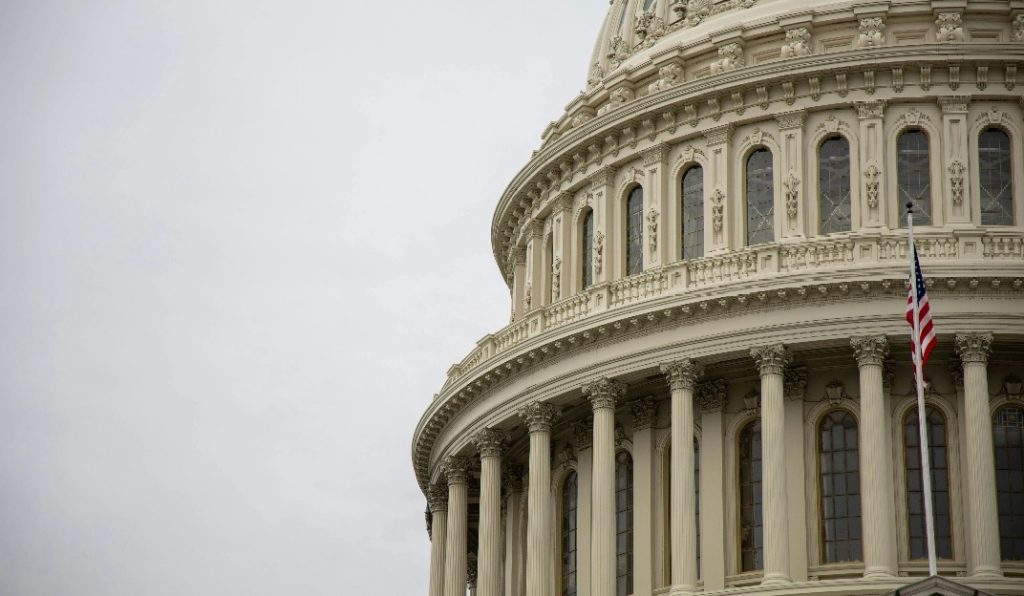

Politics has rightly been defined as “the highest form of charity.”
— POPE LEO XIV

We believe that now is the time to
Bring about the
Reign of Christ
Among the nations

JOIN THIS MOVEMENT TODAY
Are you tired of being forced to choose the lesser of two evils each election?
Are you ready to see true change?
GOD'S PLAN. GOD'S TIMETABLE.
Our nation, communities, institutions, and cultures become more of what we love when they are transformed by God.
1
Educate
The Church’s intellectual tradition interacts with the best thinkers of every culture, in every place, at every time. The Catholic synthesis gives us a leg-up on creating policies and environments that understand and respect the dignity of every human person. When we know better we do better.
2
Win Locally
Recruit, train, and send forth qualified candidates who will represent Christ in their local communities. We want politicians who know their communities to honor the common good of each member, not simply a few. Starting small is what we do. Jesus started with a few and changed the world. We hope to do the same and let America remain that city on a hill.
3
Expand
We are a universal people. The Church has made clear that, despite valid distinctions of authority, governance, and culture, no person is truly other. We are called to expand this order of love to the world, bringing the power of Jesus to every man, woman, and child. We can only do these through dedicated civil servants whose guiding light is the Lord’s Passion, Resurrection, and Ascension.
Our party platform is founded on a simple idea:
Christ
is
King
“All authority in heaven and on earth has been given to me.”
– Jesus, Matthew 28:18
Christ is King of Marriage
Christ is King of Government
Christ is King of Education

Usher in the Reign of
Christ
the
King
Join our mailing list to stay up-to-date on how you can help
FREQUENTLY ASKED QUESTIONS
&
COMMON MISCONCEPTIONS
What about the separation of church and state?
The concept of separation of church and state, often linked to the First Amendment of the U.S. Constitution, ensures that the federal government cannot establish a national religion. However, it also allows individual states to determine their own religious character, as historically reflected in early state constitutions where some recognized Christianity. This flexibility underscores that the American system does not mandate a complete divorce of faith from governance but permits states to align with religious principles if they choose.
From the Church’s perspective, as articulated by Pope Pius XI in Quas Primas (1925), Christ is King over all nations, including their governments, and the Catholic Church expects states to acknowledge His sovereignty and the Church’s role in guiding moral order. Pope Leo XIII, in Immortale Dei (1885), taught that the state should recognize the true religion—Catholicism—as a foundation for justice and the common good. Furthermore, the social rights of Christ include a formal recognition of His name and His rights, a principle rooted in both the Old Testament, where God commands, “You shall have no other gods before me” (Exodus 20:3), and the New Testament, where Christ declares, “All authority in heaven and on earth has been given to me” (Matthew 28:18). Pope Pius XI, in Quas Primas, and Pope John XXIII, in Mater et Magistra (1961), reaffirmed that this recognition is essential for societal order, urging nations to honor Christ’s kingship publicly.
The Cristero party stands as the only political entity with this purpose in mind, dedicated to upholding Christ’s kingship and the formal recognition of His name and rights, aligning with the Church’s teachings and the biblical mandate to acknowledge His divine authority over all aspects of life, including governance.
What about the religious freedom of other religions?
A Catholic political party is not against diversity of peoples in culture or way of life. No person’s license to order their life in a religious manner apart from Catholicism can be coerced. It is outside of the scope of the state to force someone to engage in Catholic worship, though it is within the power of the state to restrict religious practices which violate the natural law or go against the dignity of human persons. Freedom is for excellence rather than indifference. Man is made for the true, the good, and the beautiful and to live toward them in any degree is praiseworthy.
Does this really have a chance of working?
It depends what we mean by working. Originally, Christianity was an abject failure, that is until it steadily grew and transformed the entire political order of the West during the thousand year reign of Christendom. We need a new leavening of the world, not one that seeks to return to a bygone romantic past, but one of people dedicated to figuring out what living the Good News looks like in this day and age. The Cross was foolishness then, and it is foolishness now. Jesus has a different way of working and we hope to tap into that new mode of political life.
Doesn't history prove the Church can't handle temporal power?
Once again, this is not a proposition to put the Church back in chage of temporal power. This is a proposition between liberalism and integralism. America has never been a nation run by any church, but it has always been a religious nation imbued with christian values. The Church has failed to handle temporal power inasmuch as every single group of people in history has: men can sin and use their power to become tyrants benefitting the few. What we are proposing is men and women, guided by Catholic faith, conversion, and social doctrine, to engage in public office in a manner fitting for the kingship of Christ. We are not proposing a wedding of Church and State; of the powers proper to running a parish or diocese to be collapsed into those proper for town, city, state, and national governance.
Won't this just split the Catholic vote?
Perhaps for national office this could occur. This is why we are beginning local. Recent political developments have shown that grass-root movements have more appeal than was assumed in the past. Even independent candidates have swung large amounts of votes in national elections because of their outside of the box, but in touch, policy differences with the norms of Democrats and Republicans. We hope that over time the common sense difference between our approach and those of other national parties will create fruitful dialogue and transformation across party lines. No party is the end all be all of American political life, but some part has to reintroduce the most essential piece of the conversation: Jesus is King and that changes how we govern.